Exploring the Villages of Tinos
Experience the essence of Tinos in its villages—calm, genuine, and unhurried.
Tinos Through Its Villages
Tinos is an island of villages—each with its own pace, architecture, and everyday rituals. With Aeolis Tinos Suites as your base, it’s easy to set out for a morning stroll, a long lunch in a quiet square, or a slow afternoon of discovery—stone lanes, local craft, and Cycladic light at its most authentic.
Triantaros
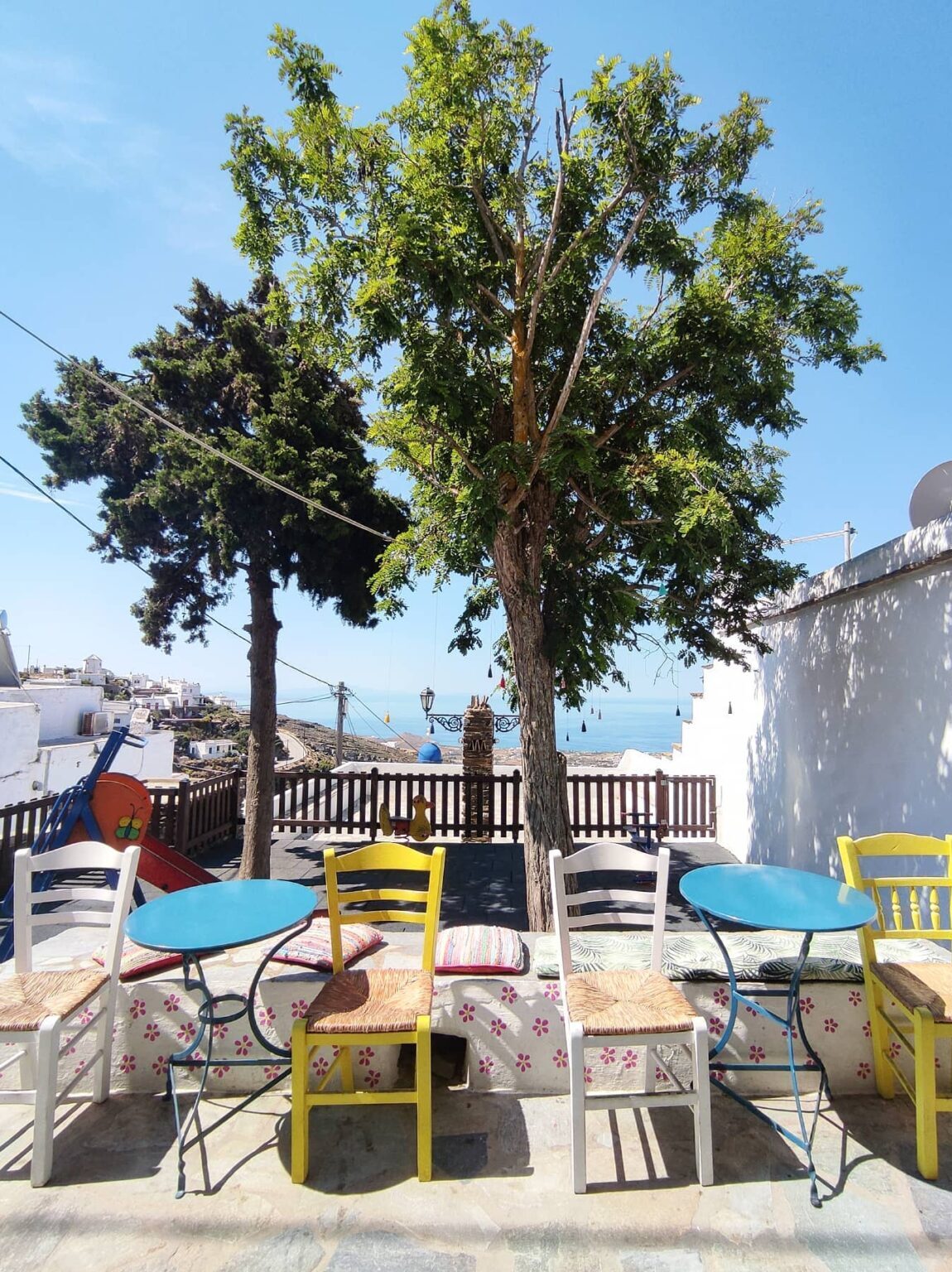
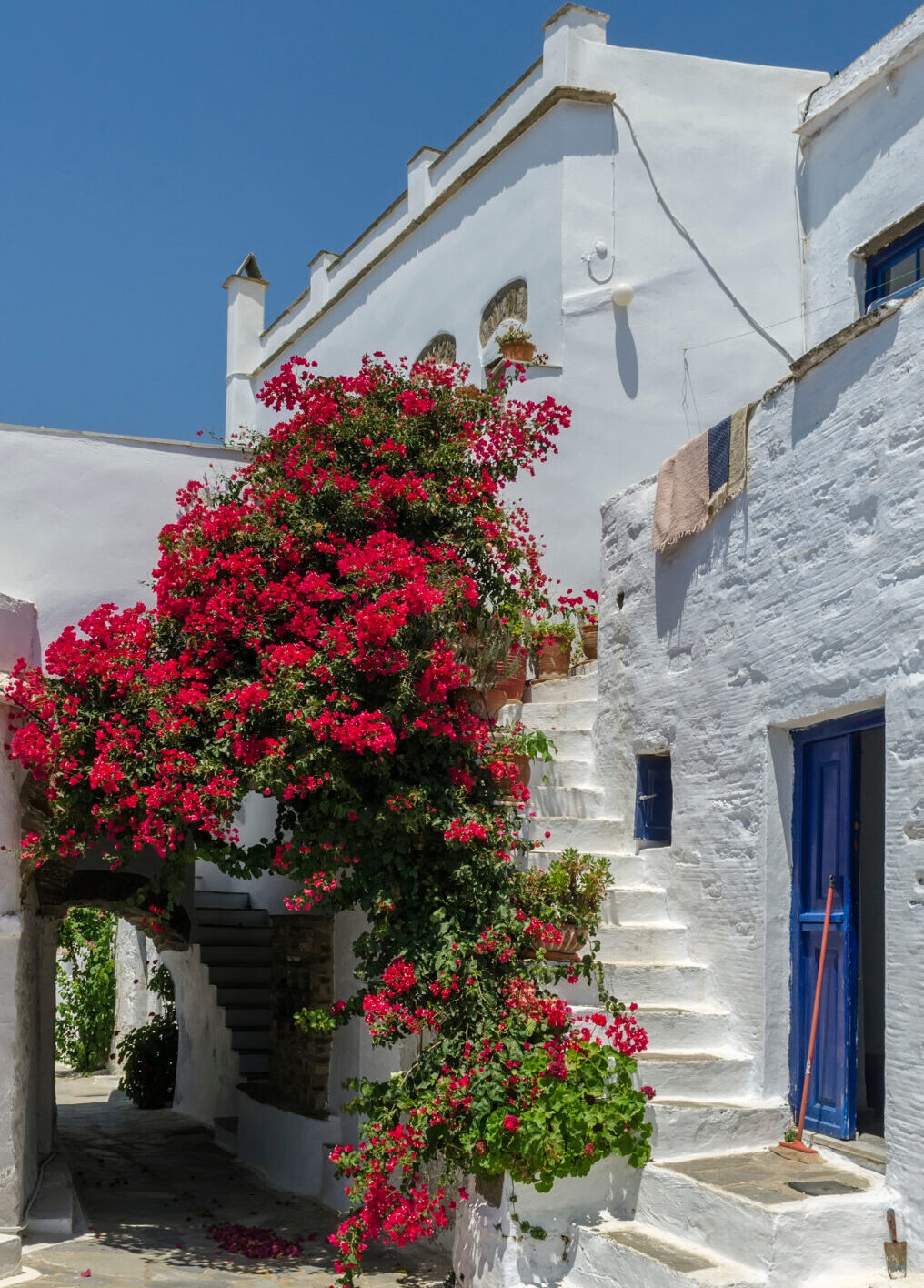
Triantaros is a classic Tinian hillside village—whitewashed and sunlit—with stone houses cascading toward the Aegean. Cobblestone lanes, shaded arches, dovecotes, and flower-filled courtyards create a calm, authentic atmosphere that feels both traditional and quietly refined. Many historic homes have been thoughtfully restored, blending original stone details with elegant, contemporary interiors.
From the village, views open toward Tinos Town and the surrounding islands. At sunset, the light over the harbour becomes part of everyday life—enjoyed from a balcony, a terrace, or a small garden. The white Church of the Holy Apostles with its blue dome anchors Triantaros, while nearby tavernas and cafés invite unhurried moments. It’s an ideal base for guests who want to slow down and experience Tinos at its most genuine.
Volax
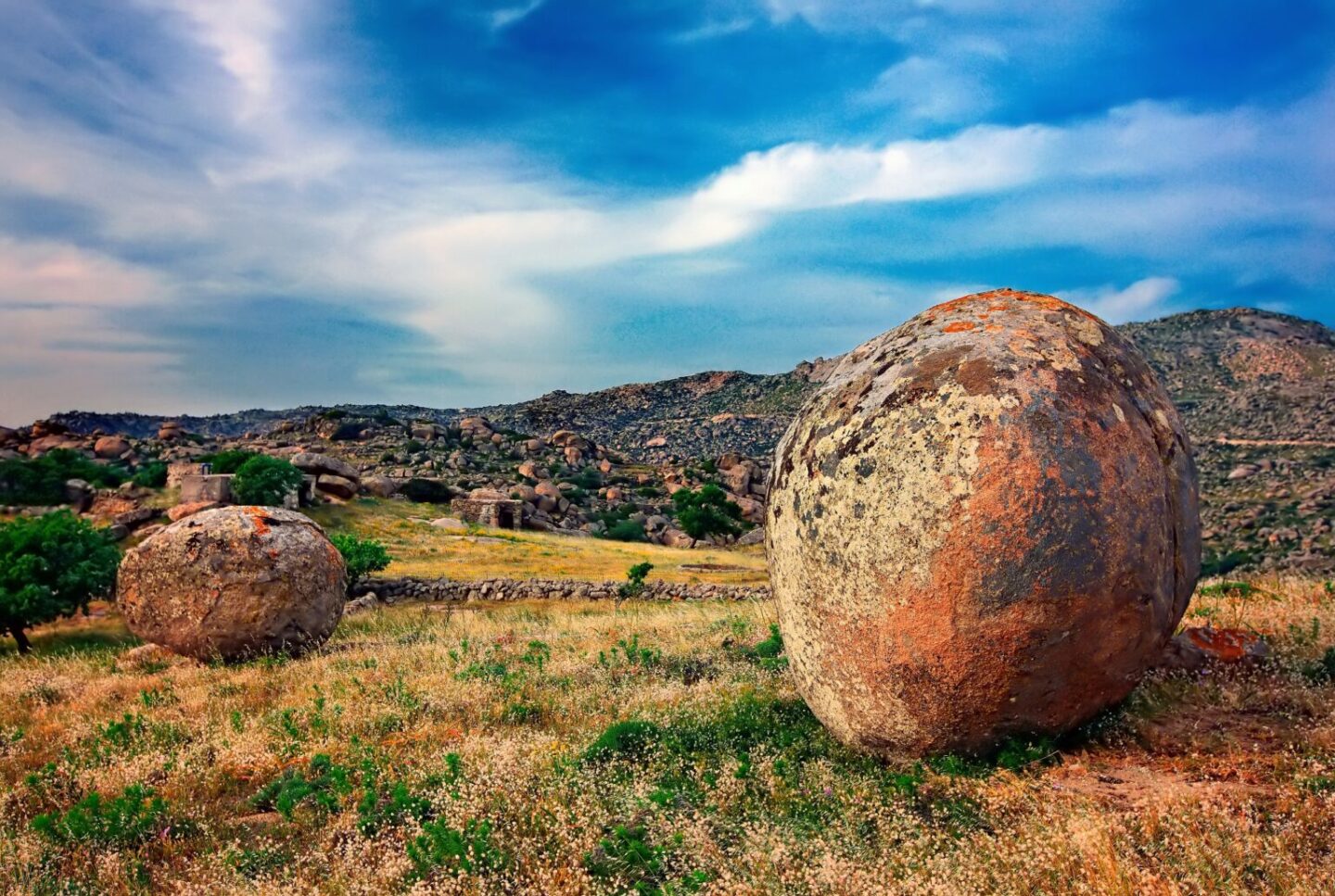
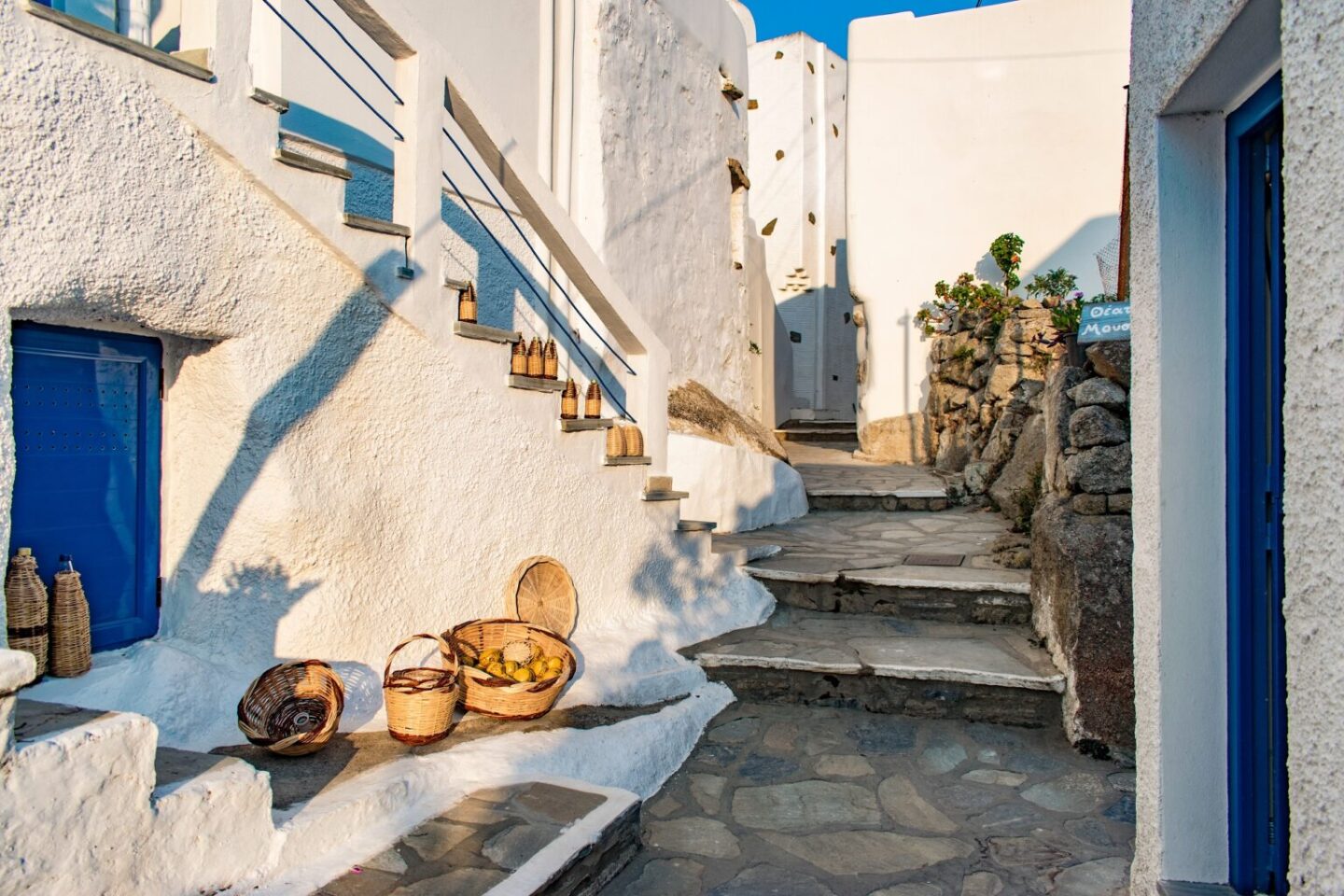
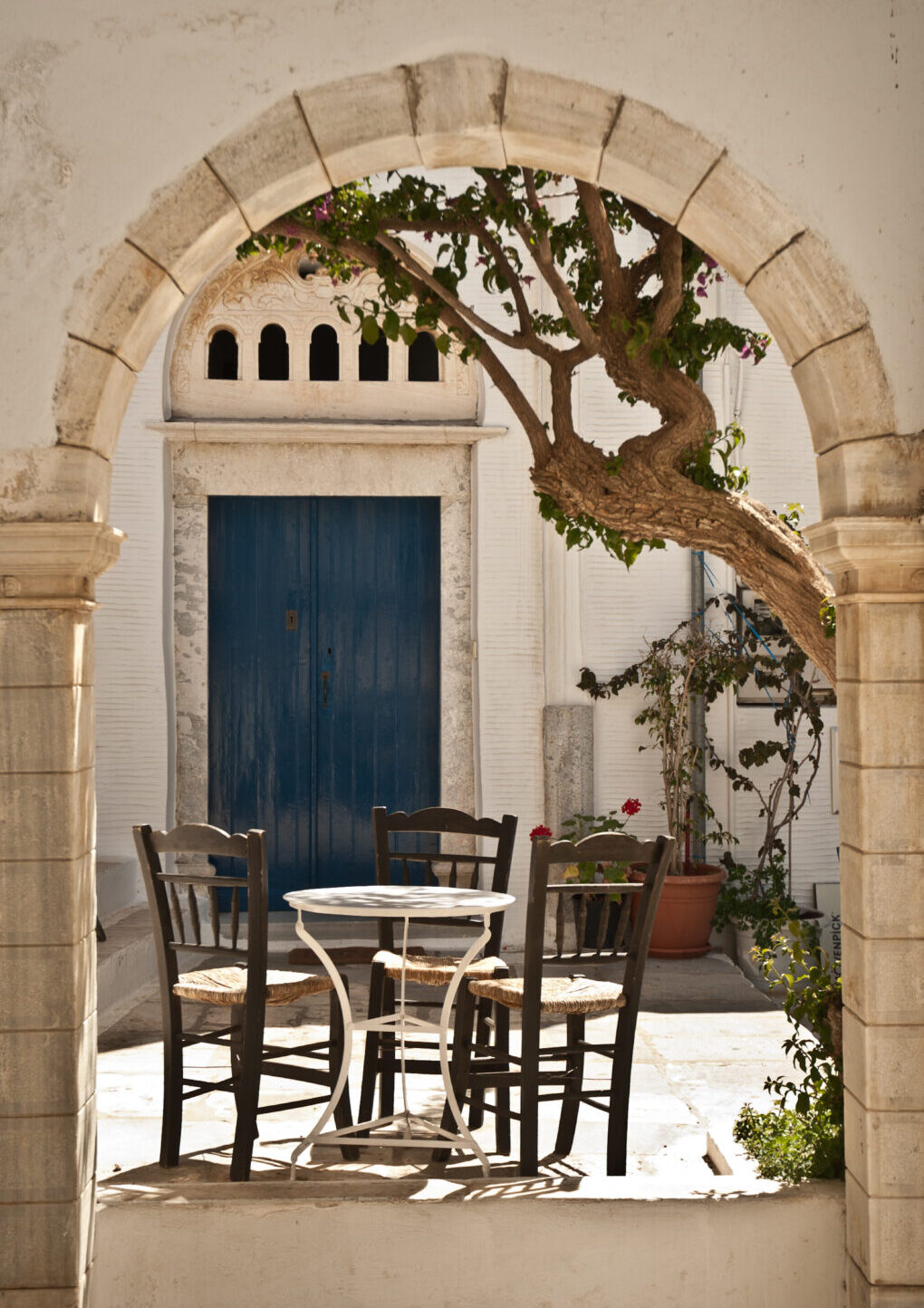
Volax is a village in the interior of Tinos, set among large, rounded granite boulders that shape the landscape around it. Whitewashed houses and narrow lanes sit naturally between the rocks, giving the village a look you don’t often see elsewhere in the Cyclades.
Volax is also known for its basket-making tradition. You can still find small workshops where artisans work by hand, keeping the craft alive. It’s an easy place to spend a quiet hour—walk through the lanes, stop at the square, and see a different side of Tinos away from the coast. As you wander, you’ll also notice short poems written on the walls of houses—small, unexpected lines that add to the village’s quiet character.
Pyrgos
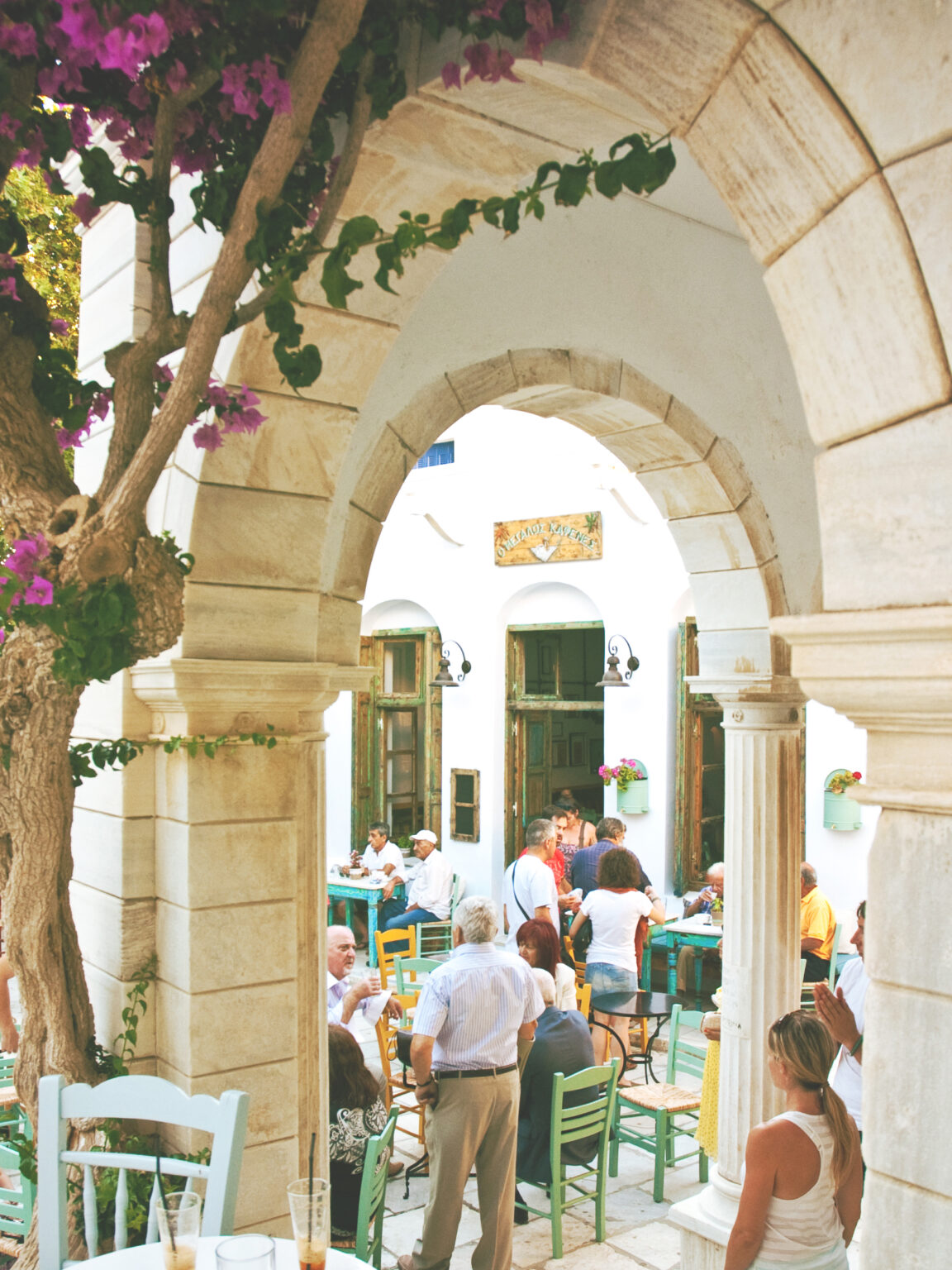
Pyrgos is the largest and most well-known village on Tinos, often called the island’s “marble village.” Here, marble isn’t reserved for landmarks—it’s part of everyday life, found in fountains, doorways, balconies, squares, and the small details that frame houses and chapels. Pyrgos is also closely linked to Tinos’ sculpting tradition, with museums, workshops, and galleries that reflect the island’s craftsmanship and artistic heritage.
A walk through the village leads past elegant homes, carved inscriptions, small chapels, and the main square shaded by a plane tree, where traditional cafés invite you to pause. Highlights include the Museum of Marble Crafts and the home of sculptor Giannoulis Halepas—or simply spending time in the square, watching village life go by, and finish with a slice of traditional galaktoboureko.
Kardiani
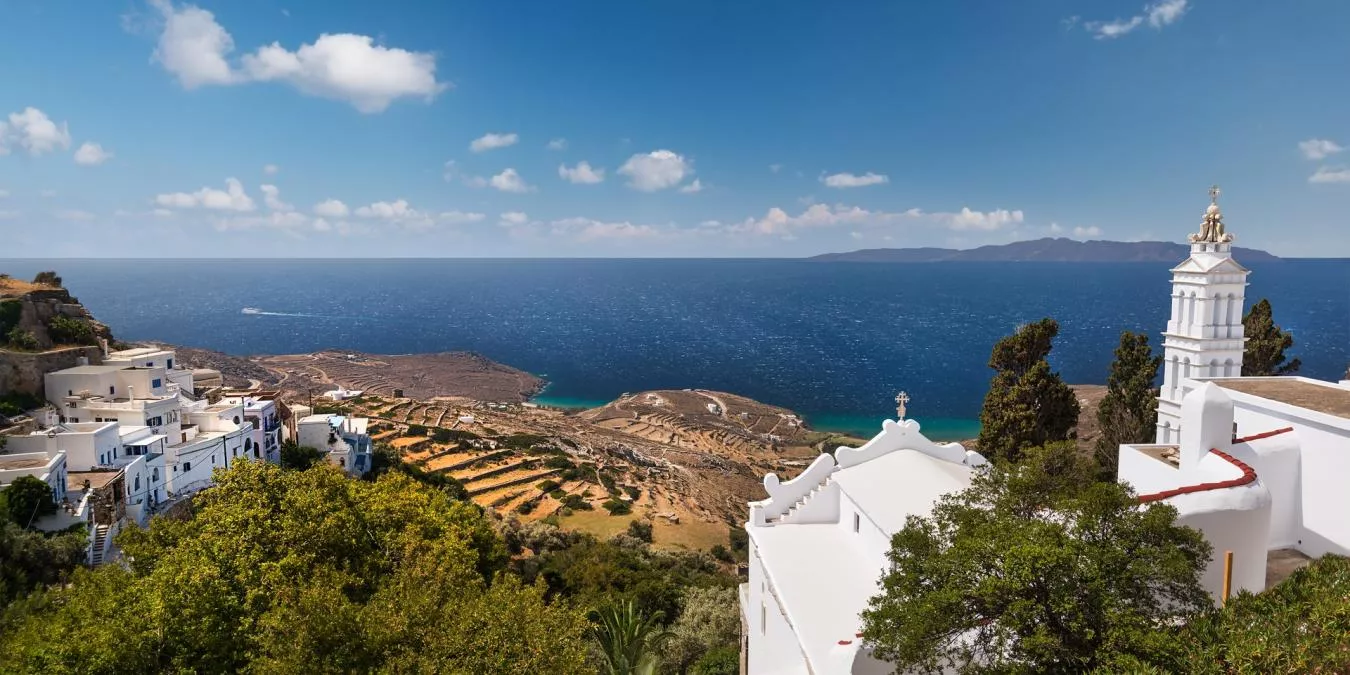
Kardiani is built amphitheatrically on a hillside above the sea, with stone houses and stepped lanes that open to views over the bay. Along the way, you’ll come across springs and old stone fountains tucked into corners of the village, adding a cool touch to the island’s stone-and-light setting.
Kardiani is a good choice for a slow walk and an easy pause at a café or taverna with Aegean views. With its architecture, quiet pace, and wide horizon, it offers a simple, authentic feel of Tinos.